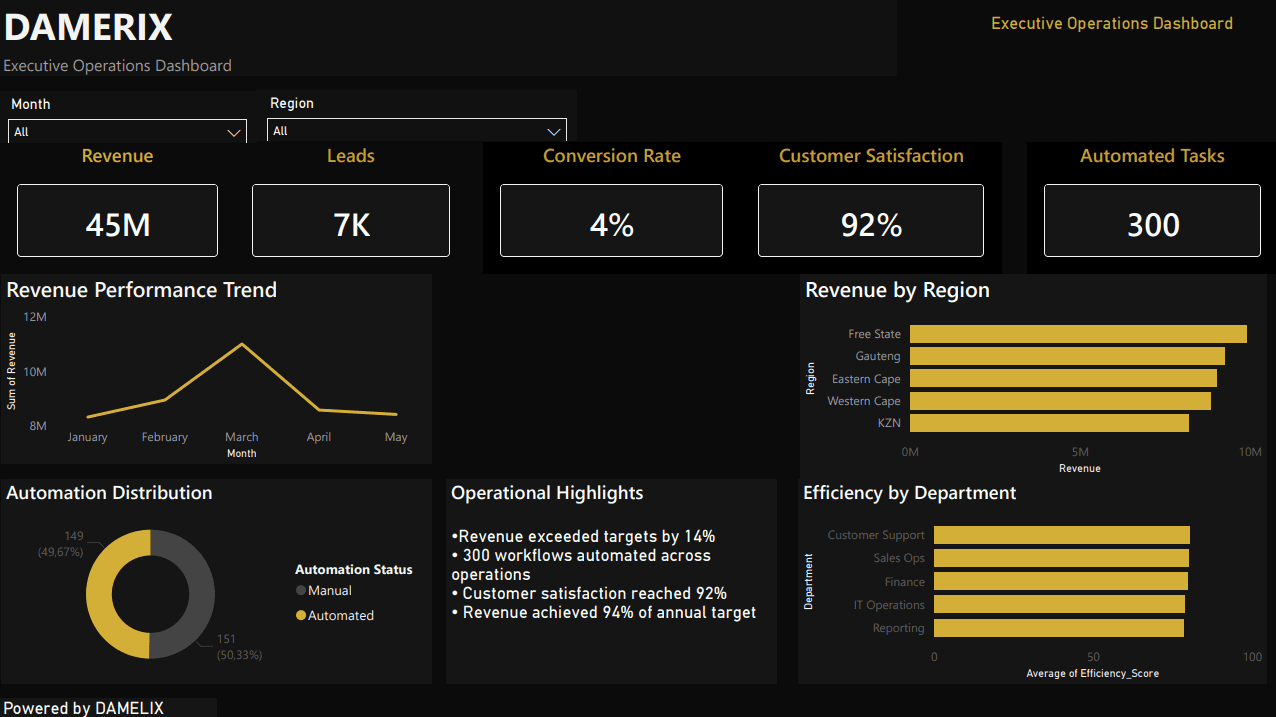
For years, reporting has been the foundation of business decision-making. Reports track key metrics, show performance over time and help organisations understand what has happened across a specific period.
But modern organisations operate in an environment where change happens quickly. Leaders often need answers in hours, not weeks. Customers expect faster responses, teams need current information and operational conditions can shift before the next reporting cycle arrives.
“Reporting tells you what happened. Visibility helps you decide what happens next.”
The DAMERIX Perspective
The limitation of traditional reporting.
Traditional reports are valuable, but they often provide a historical view of the business. By the time a report reaches decision-makers, the situation may already have changed.
This creates a gap between information and action. A business can see what happened last month, but still struggle to understand what needs attention today.
Visibility creates better decisions.
Visibility means understanding performance, risks, opportunities and operational challenges as they emerge. It gives teams a clearer picture of where work is moving well, where bottlenecks are developing and where action is required.
Interactive dashboards, connected data sources and clear performance measures help leaders move beyond waiting for information. Instead, insight becomes available when it is needed.
Why automation matters.
Reporting processes can become a challenge in themselves. Many organisations still spend significant time collecting data, updating spreadsheets and preparing manual reports.
Automation reduces that effort and improves the flow of information across the business. The goal is not simply to produce more reports. It is to make the right information easier to access, easier to trust and easier to act on.